
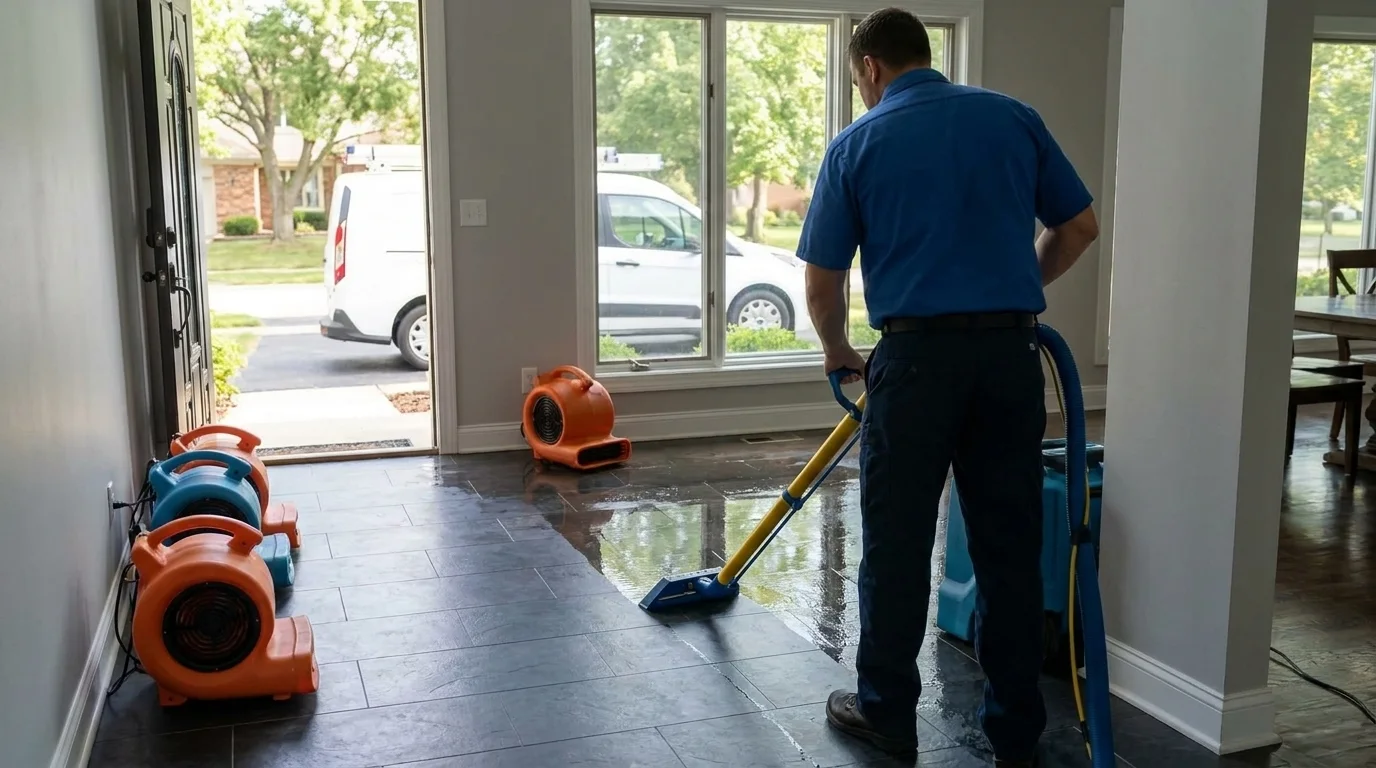
Water Cleanup in Naperville
Water cleanup in Naperville, IL. Insurance billing accepted. Call (877) 379-2767.
Our technicians are dispatched from our Chicago, IL headquarters and are typically on-site in Naperville within 60 minutes of your call.
Naperville sits on the DuPage County plain where clay-heavy soils slow drainage and a single burst pipe or sump failure can leave inches of standing water across a finished basement floor before the next morning. When that happens, whether it’s a supply line that let go overnight or a storm that overwhelmed the storm sewer on your block, the clock starts immediately. Water that looks contained at the surface is already wicking into drywall, pushing under laminate, and soaking into the framing behind your walls. Dry Bros Water & Fire Restoration handles water cleanup in Naperville with the kind of urgency that situation demands.
Why Naperville Properties See Water Damage the Way They Do
The DuPage River corridor and the low-lying subdivisions that developed around it create predictable drainage pressure during heavy rain events. Naperville’s growth from a small Fox River town into one of Illinois’s largest cities means the housing stock spans several eras, ranch homes and split-levels from the 1960s and 70s sit alongside townhome developments from the 1990s and newer construction from the 2000s onward. Each era brings its own vulnerability.
Older ranch-style homes common in established Naperville neighborhoods often have block-wall basements with aging crock-style sump pits and original copper or galvanized supply lines. Galvanized pipe corrodes from the inside out, narrowing over decades until pressure spikes cause a failure, and the basement is usually the first place that water lands. Newer townhome and condo construction, by contrast, tends to have shared plumbing chases and party walls, which means a leak in one unit can migrate silently into an adjacent one before either owner notices.
Naperville also sits in a climate zone where freeze-thaw cycles between November and March put real stress on exterior hose bibs, crawl space pipes, and any supply line running through an uninsulated exterior wall. A single overnight low in the single digits is enough to split copper.
What Water Cleanup Actually Involves in Naperville
Arriving on-site, the first priority is stopping the source if it hasn’t been stopped already. ComEd and Nicor Gas service most of Naperville, and if there’s any question about electrical safety near standing water, power to the affected area gets shut off before anyone steps in.
From there, the process moves in a defined sequence:
Standing water extraction comes first. Truck-mounted and portable extractors pull water from carpet, hard flooring, and low-lying areas. Water under a floating floor or behind a baseboard register doesn’t extract the same way, it has to be found with a moisture meter and addressed with targeted drying.
Moisture mapping follows. Thermal imaging and calibrated meters identify where water has traveled beyond what’s visible. In Naperville’s older split-levels, water can travel laterally through the subfloor and show up in a room that never had direct contact with the source.
Structural drying uses industrial air movers and dehumidifiers positioned to create a controlled drying environment. In DuPage County’s humid summers, ambient humidity can work against the drying process, equipment selection and placement matter.
Material assessment determines what can be dried in place and what needs to come out. Wet insulation, saturated drywall below the flood line, and soaked carpet pad typically cannot be effectively dried in place and are removed to prevent secondary damage.
Reaching Naperville from Chicago
Dry Bros operates out of Chicago, and Naperville is accessible via I-88 west from the city, a direct route that avoids the surface-street congestion that slows response in closer-in suburbs. Depending on time of day and traffic on the Tri-State, crews can move efficiently to Naperville’s eastern and western reaches. If you’re calling from a neighborhood near downtown Naperville or from the newer developments further west toward Route 59, give us your cross streets when you call, it helps us route accurately.
Local Note
Naperville’s townhome and condominium associations, particularly in developments built between the mid-1990s and mid-2000s, often have governing documents that specify how and when common-area or shared-wall repairs can be made, and some require the association’s property manager to be notified before any structural drywall removal begins. If you’re in a unit and not sure whether your HOA has that requirement, it’s worth a quick call to your management company before demo starts. Dry Bros can work around that coordination; it just needs to happen before, not after, materials come off the wall.
Call (877) 379-2767 to reach Dry Bros Water & Fire Restoration. Describe what you’re seeing, where the water is, and whether the source is controlled, that information lets us arrive prepared for your specific situation in Naperville rather than starting from scratch on-site.
water-cleanup in Naperville: Service Coverage
Frequently Asked Questions
How fast can you arrive for water-cleanup in Naperville?
How quickly can Dry Bros reach Naperville from the Chicago area for a water cleanup call?
Naperville has a lot of older ranch homes with block-wall basements, does that affect how water cleanup is done?
I'm in a Naperville townhome with a shared wall, if the water damage crossed into my neighbor's unit, how does that work?
Does Naperville's clay soil and drainage pattern make basement flooding more likely after heavy rain?
What materials typically can't be saved after standing water in a Naperville home?
Will my homeowners insurance cover water-cleanup in Naperville?
water-cleanup response in Naperville
Most Naperville calls see a technician on-site within 60 minutes from our Chicago headquarters.