
Water Cleanup in Evanston
Water cleanup in Evanston, IL. Insurance billing accepted. Call (877) 379-2767.
Our technicians are dispatched from our Chicago, IL headquarters and are typically on-site in Evanston within 60 minutes of your call.
Evanston sits on a narrow strip of land between Lake Michigan and the North Shore rail corridor, and that geography shapes how water damage unfolds here in ways that don’t apply to most Chicago suburbs. The city’s older housing stock, much of it built before World War II, hides cast-iron drain lines that corrode quietly for decades, clay tile sewer laterals that crack under tree root pressure, and basement walls that were never waterproofed to modern standards. When a pipe lets go or a storm overwhelms the combined sewer system, standing water can appear faster than most homeowners expect. Dry Bros Water & Fire Restoration responds to those calls, handling water cleanup from extraction through structural drying so the damage stops where it starts.
Why Evanston Properties See Water Damage Differently
The combination of Lake Michigan’s weather patterns and Evanston’s clay-heavy soils creates conditions that amplify water intrusion events. Lake-effect moisture keeps humidity elevated through much of the year, which means wet materials don’t dry passively the way they might in a drier climate, they stay wet long enough for secondary damage to set in. Clay soil drains slowly, so after a significant rain event, groundwater pressure against basement walls can persist for days after the storm passes.
The city’s housing stock adds another layer of complexity. Homes built in the early twentieth century, common throughout Evanston’s established residential blocks, often feature plaster-on-lath wall construction rather than modern drywall. Plaster absorbs water more slowly than gypsum board, which means a surface moisture reading can look acceptable while the lath behind it stays saturated. Without thermal imaging and deep-probe moisture meters, that hidden moisture goes undetected and becomes a mold problem within days. Older balloon-frame construction also allows water to travel vertically inside wall cavities from a first-floor leak to a basement, or from a roof penetration down to the main level, in ways that platform-frame homes don’t.
Evanston’s combined sewer system, which carries both stormwater and sanitary waste in a single pipe, is a known source of basement backups during heavy rain. When that system surcharges, the water entering a basement is not clean water. It requires a different extraction and sanitization approach than a supply-line burst would.
Our Water Cleanup Process in Evanston
The first priority on any water call is stopping ongoing intrusion if the source is still active, shutting off the supply, sandbagging a floor drain, or identifying where the sewer backup is entering. Once the source is controlled, truck-mounted extraction equipment removes standing water from finished and unfinished spaces. In basements with floor drains that are still flowing backward, we work around the drain until the municipal system has cleared.
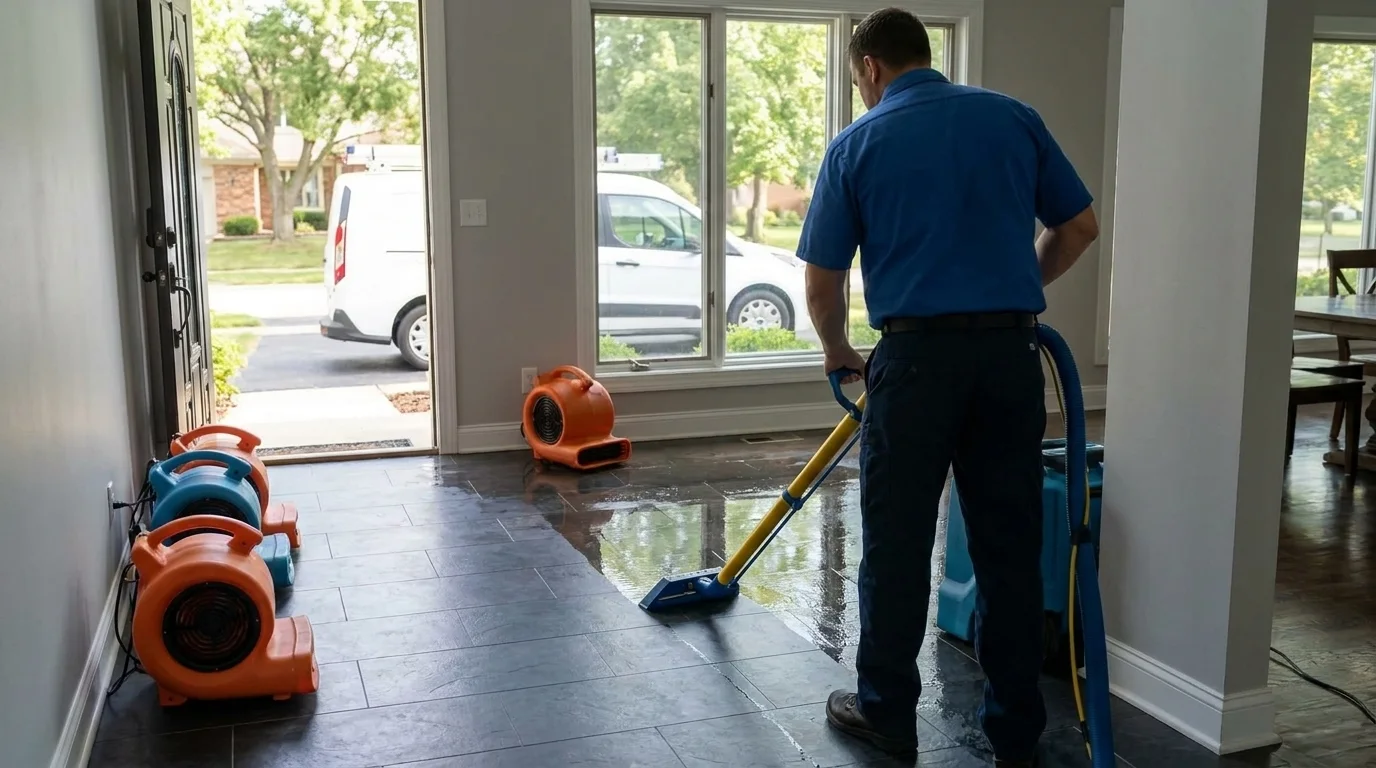
After bulk water is out, the work shifts to what you can’t see. Thermal imaging cameras locate moisture that has wicked into wall cavities, under flooring, and into subfloor assemblies. In Evanston’s older homes, we pay particular attention to plaster walls and original hardwood floors, both of which hold moisture longer than their modern equivalents and require more conservative drying timelines. Industrial air movers and desiccant or refrigerant dehumidifiers run in a configuration calibrated to the actual square footage and material types present, not a one-size setup.
Moisture readings are logged at each visit so the drying curve is documented, useful both for confirming the job is complete and for supporting an insurance claim.
Reaching Evanston from Chicago
Dry Bros operates out of Chicago, and Evanston is a direct run up Sheridan Road or the Skokie Swift corridor depending on traffic. The city’s street grid is straightforward, though parking and access in the denser blocks near Northwestern University’s campus can require some coordination on larger jobs where multiple vehicles and equipment trailers are involved. We call ahead on jobs in tighter residential blocks to confirm staging before arrival.
Local Note: Evanston’s Sewer Backup Pattern
One thing that comes up repeatedly in Evanston is the timing of sewer backup calls relative to storm events. Because the combined sewer system can take several hours to clear after a major rain, homeowners sometimes call after the water has already receded, and assume the problem is over. It isn’t. Water that entered through a floor drain during a sewer surcharge event leaves behind contamination that isn’t visible once the water dries. That residue requires proper sanitization, not just surface cleaning. If your basement flooded during a storm and the water came up through a drain rather than in through a window well or wall crack, treat it as a contaminated-water event regardless of how it looks now.
If standing water or a recent backup has left you uncertain about what’s wet and what’s safe, call Dry Bros Water & Fire Restoration at (877) 379-2767. We serve Evanston properties and can schedule an assessment to document what’s actually dry and what still needs attention.
water-cleanup in Evanston: Service Coverage
Frequently Asked Questions
How fast can you arrive for water-cleanup in Evanston?
How does Evanston's combined sewer system affect the water cleanup process?
Are older Evanston homes harder to dry out after water damage?
Does the proximity to Lake Michigan affect how long water damage drying takes in Evanston?
What should I do immediately after a basement flood in Evanston before your crew arrives?
How does Dry Bros coordinate with insurance carriers on Evanston water damage claims?
water-cleanup response in Evanston
Most Evanston calls see a technician on-site within 60 minutes from our Chicago headquarters.