
Water Cleanup in Skokie
Water cleanup in Skokie, IL. Insurance billing accepted. Call (877) 379-2767.
Our technicians are dispatched from our Chicago, IL headquarters and are typically on-site in Skokie within 60 minutes of your call.
Skokie sits on some of the flattest, most clay-dense terrain in Cook County, and when a pipe bursts or a basement floods here, that water has nowhere to go fast. The same dense soil that makes Skokie’s older bungalows and split-levels feel solid underfoot also slows drainage and keeps moisture trapped against foundation walls long after the visible puddles are gone. If you’re dealing with standing water, soaked drywall, or that unmistakable musty smell spreading through your home, the clock is already running.
Why Skokie Properties See Water Damage Differently
Most of Skokie’s residential housing stock was built between the 1940s and 1970s, a construction era defined by basement utility rooms, cast-iron or galvanized steel supply lines, and plaster-over-lath wall systems that behave nothing like modern drywall when wet. Plaster can read nearly dry at the surface while the wood lath behind it stays saturated for days. Moisture meters calibrated for drywall will miss it entirely if the technician isn’t adjusting for the substrate.
Skokie also sits in a region where freeze-thaw cycles hit hard from December through March. Water infiltrating a foundation crack in November can expand through winter and open a significant gap by spring, often showing up as a slow seep that homeowners attribute to snowmelt rather than a structural issue. That seasonal pattern makes early detection and thorough drying especially important before temperatures drop again.
The city’s combined sewer system, shared with many older Chicago-area municipalities, can back up during heavy rain events. When that happens, the water entering a basement isn’t clean, it carries contaminants that change how cleanup must be handled and what materials can be salvaged versus removed.
Our Water Cleanup Process in Skokie
Every job starts with a full moisture assessment, not just of the floor, but of walls, subfloor, and any adjacent cavities where water migrates silently. In Skokie’s older homes, that means checking behind plaster, under hardwood, and inside the joist bays above basement ceilings.
Once the scope is mapped, standing water is extracted using truck-mounted and portable extraction units capable of pulling water from carpet, subfloor, and low-lying spaces where gravity doesn’t cooperate. Skokie basements with finished ceilings often require drilling small access ports to reach saturated insulation above, a step that saves the framing and eliminates the need for a full ceiling tear-out.
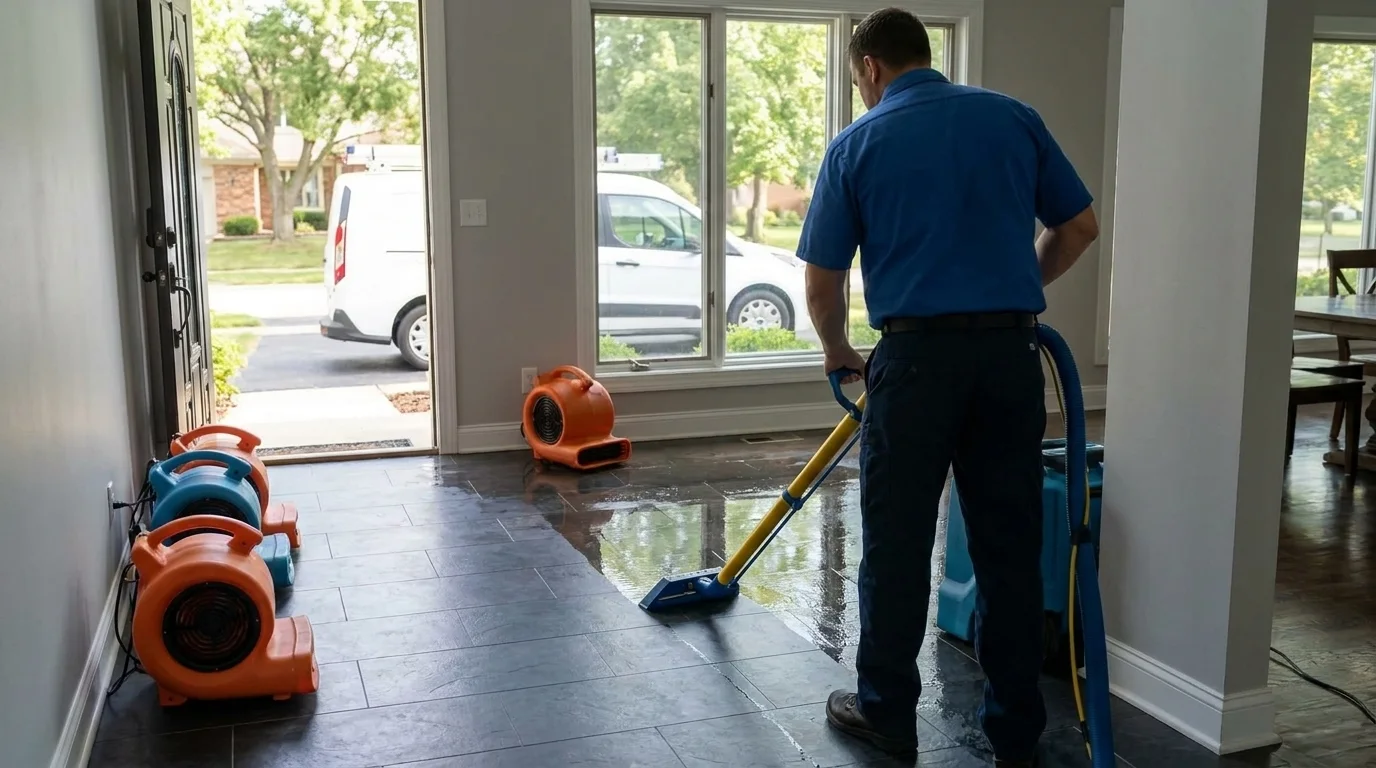
Drying equipment, industrial air movers and refrigerant or desiccant dehumidifiers, is placed based on the room geometry and the specific materials involved. Monitoring readings are logged at each visit so you can see the drying curve progressing, not just take our word for it. Nothing is called dry until the numbers confirm it.
If the source was a sewer backup or any gray or black water intrusion, affected porous materials are removed rather than dried in place. That’s not a upsell, it’s the only approach that prevents microbial growth from taking hold in material that can’t be adequately sanitized.
Reaching Skokie from Chicago
Dry Bros operates out of Chicago, and Skokie is a direct run up the Edens Spur or surface routes through Rogers Park and West Ridge depending on traffic. The city’s grid layout and accessible alley system in most residential blocks means crew and equipment can typically stage close to the affected property without the access complications that come with some suburban developments.
Call (877) 379-2767 to get a crew scheduled. When you call, describe what you’re seeing, water depth, where it’s coming from if known, and whether the source is stopped, so the right equipment loads on the first truck.
Working with Insurance on Skokie Water Claims
Water damage claims in Cook County follow the same carrier documentation requirements as anywhere in Illinois, but the age of Skokie’s housing stock sometimes creates friction. Adjusters occasionally question whether pre-existing conditions, a slow foundation crack, aging supply lines, contributed to the loss. Thorough photo documentation of the damage scope, moisture readings, and material conditions at first arrival helps establish a clear timeline that supports your claim.
Dry Bros documents the loss from the first hour on-site: photos, moisture maps, and a written scope. That file goes to your carrier so you’re not reconstructing the damage from memory weeks later when the adjuster gets around to your file.
Local Note
Skokie’s bungalow belt, the dense stretch of brick and frame homes running through the interior of the city, was built largely before vapor barriers were standard practice. The crawl spaces and partial basements in these homes often have bare soil or single-layer concrete floors that wick ground moisture year-round. After any water event, that baseline moisture load means dehumidifiers need to run longer than they would in a newer home with a properly sealed slab. If a contractor pulls equipment after two days because the air feels dry, ask to see the actual moisture readings from the floor assembly, surface conditions in these homes can be misleading.
Water damage doesn’t pause while you figure out next steps. Call Dry Bros Water & Fire Restoration at (877) 379-2767 to schedule water cleanup in Skokie and get the drying process started before secondary damage compounds the loss.
water-cleanup in Skokie: Service Coverage
Frequently Asked Questions
How fast can you arrive for water-cleanup in Skokie?
How does Skokie's clay soil affect water damage in basement foundations?
Does Skokie's combined sewer system change how water cleanup is handled?
Are Skokie's older plaster-wall homes harder to dry after water damage?
What should I do immediately after standing water appears in my Skokie home?
How does Dry Bros document water damage for insurance claims on Skokie properties?
water-cleanup response in Skokie
Most Skokie calls see a technician on-site within 60 minutes from our Chicago headquarters.